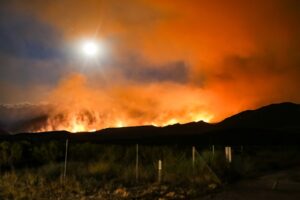


Photo by Paul Keiffer on Unsplash
Center-Left Coverage
RIGHT
0
+10
The US has rescued the missing crew member of the US F-15 fighter jet which was shot down over southern Iran.
Perspective Analysis
vs.
New York Post ▶
Both outlets cover the same military incident—a U.S. F-15E fighter jet shot down over Iran with one crew member still missing—but frame the story quite differently. NPR leads with temporal context, emphasizing this as part of a broader “6th week” of ongoing war, suggesting a protracted conflict. The New York Post focuses more narrowly on the immediate search and rescue operation, highlighting military aircraft “spotted flying low” and social media footage of the efforts.
The outlets show notable differences in emphasis and sourcing. NPR appears to treat this as part of an established conflict narrative, referring matter-of-factly to “the war in Iran.” The Post, meanwhile, emphasizes the visual evidence of the search operation, citing “footage circulating on social media” that was “verified” by their reporting. This suggests the Post is working to establish the credibility of real-time developments.
In terms of language, NPR adopts a more clinical, news-summary approach with phrases like “entered its 6th week” and “bailed out,” while the Post uses more immediate, action-oriented language like “spotted flying” and “hunts for missing fighter pilot.” The Post’s framing suggests ongoing drama and military action, while NPR’s approach contextualizes this incident within a longer timeline of conflict.
Original Article(s) — Choose Your Perspective:
Each source is labeled with its bias score and political leaning. Click any source to read the original article.
Source 1
— BBC News
L 2 • Left Leaning
Source 2
— The New York Times
L 4 • Left Leaning
Source 3
— NPR
L 3 • Left Leaning
Source 4
— New York Post
R 5 • Right Leaning
Bias scores range from 0 (center) to 10 (far left or right). L = Left • C = Center • R = Right.
The B.S. Report provides bias transparency so you can evaluate news from all angles.
Read multiple sources to get the full picture.